
Air Jordan Kicks Head-to-Head: High-Top vs Low-Top Styles
Deciding between high-top and low-top Air Jordan shoes is one of the most popular debates encountered by sneaker fans in 2026. Both silhouettes bear decades of basketball tradition and streetwear clout, yet they address distinctly different needs on and off the court. High-top models defined Michael Jordan’s career, providing the ankle lockdown that enabled him rule the NBA through six championship seasons. Low-top models, meanwhile, grew into a style-driven option that prioritizes freedom of movement and summer versatility. Knowing the real differences between these two constructions can prevent regret and enable you to create a more complete rotation. In this matchup, we explore athletic performance, comfort, fashion, and worth so you can arrive at a well-educated decision on your upcoming pair of Air Jordans.
The History Behind Both Silhouettes
When Peter Moore crafted the original Air Jordan 1 in 1985, high-top construction was the unquestioned norm for basketball sneakers. The high collar wrapped around Michael Jordan’s ankle area and became an signature visual element that Nike pushed aggressively during the “Banned” marketing campaign. It was not until the Air Jordan 11 Low launched in 1996 that Jordan Brand meaningfully explored the low-top format for a mainline shoe. That release air jordan proved that collectors would welcome a reduced version of an fan-favorite shoe, clearing the path for low-top editions of virtually every mainline Jordan. By the mid-2000s, low-top Jordans had turned into a seasonal go-to, consistently selling out alongside their high-cut siblings. As of now in 2026, Jordan Brand launches approximately similar quantities of high-top and low-top colorways each quarter, reflecting even market demand across both formats.
Joint Stability and Basketball Performance
High-top Air Jordans reach 2 to 3 inches above the ankle bone, producing a firm collar that restricts ankle rolling during aggressive movements and jumps. Silhouettes like the Air Jordan 1 High and Air Jordan 12 incorporate cushioned collars combined with firm heel counters to secure the foot during game situations. According to a 2024 research paper published in the British Journal of Sports Medicine, high-top basketball footwear reduced the incidence of sprained ankles by approximately 28 percent compared to low-top options in amateur players. Low-top Jordans, such as the Jordan 1 Low and Jordan 11 Low, trade off some of that ankle support in favor of a lighter build — often trimming 50 to 80 grams per shoe. For casual ballers who compete in rec-league games once or twice a week, that lighter build leads to faster first steps and reduced fatigue over longer games. The trade-off is real, though: if you have a past ankle problems, a high-top sneaker with proper lacing is still the wiser selection for any on-court activity.
All-Day Wearability
Outside of basketball, comfort requirements change significantly, and low-top Air Jordans frequently take the lead. The lower collar height removes the discomfort that high-tops can create against the Achilles tendon during extended walking. Many wearers note that low-cut models feel comfortable after just two or three outings, while high-cut versions may need five to seven outings before the ankle cushioning fully molds. Sole technology remains unchanged across both heights — the Air Jordan 1 incorporates the same Air sole unit regardless of height, and the Jordan 11 keeps its full-length Air unit in both iterations. Heat is another practical element: low-tops allow significantly more airflow around the ankle area, which makes them the top pick for hot weather when sweating becomes an problem. For winter or full days of wear, the heat retention delivered by a high-top collar can in fact work in your favor, trapping warmth contained around the joint.
Aesthetic Appeal and Styling Flexibility
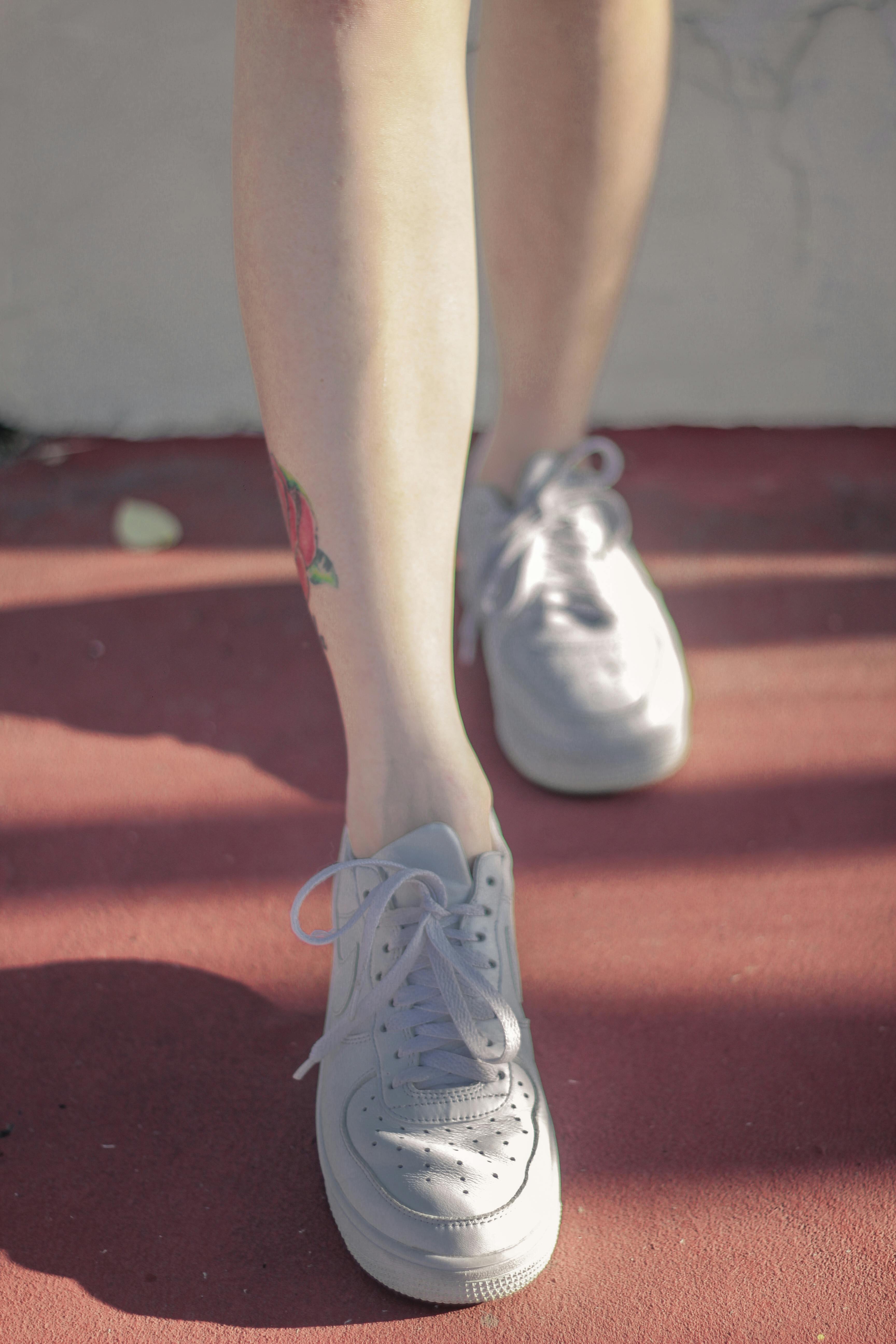
From a visual standpoint, high-top Air Jordans demand interest and act as a centerpiece in any outfit. The Air Jordan 1 High, in releases like Chicago, Bred, and Royal, regularly ranks among the most shot sneakers on social media, amassing millions of tagged posts on Instagram alone. High-top models pair best with slim-fit or tapered trousers, joggers, and casual shorts that allow the full shape to be on display — hiding a high-top under loose jeans defeats its visual purpose. Low-cut Jordans, on the other hand, present a sleeker silhouette that works seamlessly with a greater range of outfits, such as straight-leg jeans, khakis, and even smart-casual trousers. Style-conscious sneaker enthusiasts in 2026 frequently style Jordan Lows as a crossover shoe that links streetwear and business-casual settings. The styling flexibility grants Jordan Lows a marginal advantage for buyers who need a single pair to address different dress codes throughout the week.
Color and Material Considerations
High-top Air Jordans generally include more surface area, which permits creatives to add multiple color blocks and diverse textures across the shoe’s upper. This additional surface area is why famous colorways like the Jordan 1 High “Union LA” and “Travis Scott” partnerships seem so visually striking — there is literally more canvas to employ. Jordan Lows compress that same design approach into a smaller canvas, which can either look cleaner or feel visually cramped depending on the colorway. Leather, nubuck, suede, and patent leather all appear across both formats, though luxury fabrics often appear more commonly in high-top limited editions. In terms of durability, the additional material on a high-top means slightly more coverage against abrasion around the ankle area. Sneakerheads committed to preserving their Jordans immaculate for years commonly lean toward high-tops for this pragmatic reason alone.
High-Top vs Low-Top: Direct Comparison
| Attribute | High-Top Air Jordans | Low-Top Air Jordans |
|---|---|---|
| Ankle Protection | Superior — extends past the ankle | Low — rests under the ankle bone |
| Weight per Shoe | 400–500 g per shoe | 340–420 g per shoe |
| Best Season | Fall / Winter | Spring / Summer |
| Fashion Versatility | Streetwear and athletic | Streetwear, casual, semi-formal |
| Time to Break In | 5–7 wears | 2–3 wears |
| Resale Markup | Typically stronger | Average |
| Ventilation | Fair | Superior |
| Standard Retail Price | $170–$200 | $130–$170 |
Aftermarket Worth and Collectibility
In the resale space, high-top Air Jordans have over the years fetched steeper price premiums than their low-cut siblings. Data from StockX demonstrates that the Air Jordan 1 High OG posts a 40 to 60 percent price increase over MSRP in sought-after releases, while the Jordan 1 Low OG generally records a 15 to 30 percent price increase. Limited-edition high-tops, notably those associated with collaborations with creatives like Virgil Abloh or Travis Scott, have hit secondary market prices above $2,000 in deadstock condition. Low-tops are gradually narrow the difference, however, as Jordan Brand puts more resources in special low-top drops designed for casual wearers. The Travis Scott x Air Jordan 1 Low Reverse Mocha, for example, commanded significantly above $1,500 on aftermarket sites throughout 2023 and 2024. For collectors prioritizing long-range returns, high-top models stay the more secure investment, but the low-top market is developing swiftly and merits consideration.
Which Should You Buy?
Your selection at the end of the day depends on how and where you intend to use your Air Jordans. If basketball performance is important to you — even at a pick-up level — the protective features of a high-top are impossible to overlook, and the added ankle support can stop sprains that would sideline you for weeks. For daily use across varied settings, a low-top Air Jordan delivers superior flexibility, reduced mass, and an faster break-in experience that slots seamlessly into a busy schedule. Cost-aware buyers will also benefit from that low-tops usually cost $20 to $40 below their high-top counterparts, extending your shoe budget more. If possible, a complete rotation includes at least one of each: a high-top for statement dressing and fall and winter, and a low-top for effortless spring and summer styling. Review your current wardrobe, assess your physical activity, and think about your local climate before deciding. Whichever cut you select, you are purchasing a model supported by over 40 years of creative engineering from Jordan Brand.
The Ultimate Assessment
The high-top versus low-top argument has no single correct answer because both cuts thrive in distinct settings. High-top Air Jordans deliver superior ankle support, more impressive resale markups, and a bolder style statement that rules streetwear photography and sneaker meetups. Low-top Air Jordans counter with lighter construction, shorter break-in times, greater styling range, and a more accessible price point for entry-level enthusiasts. In 2026, Jordan Brand keeps on advance across both formats, debuting new cushioning systems and green materials that upgrade both options year over year. The most strategic approach is to assess each drop on its unique qualities rather than following a universal rule for one format over the other. Whether you strap on a high-top pair for a weekend sneaker meet or step into a low-top pair for a summer barbecue, the Jumpman logo on your foot bears the same storied significance.